
Introduction
Agriculture has always been the backbone of India’s economy, employing more than half of the population. For centuries, farming relied heavily on traditional practices, intuition, and seasonal patterns. But in recent decades, challenges such as climate change, rising input costs, declining soil fertility, and water scarcity have made it increasingly difficult for farmers to sustain livelihoods.
At the same time, new technologies, scientific practices, and farmer-focused services are transforming agriculture into a more sustainable and profitable profession. Krushi Savaya stands at the forefront of this transformation, helping farmers move from guesswork to data-driven, sustainable farming methods.
This blog explores the key trends shaping the future of farming in India and how farmers can benefit from adopting sustainable and technological approaches.
The Challenges Farmers Face Today
Despite India’s agricultural strength, farmers continue to face hurdles that threaten productivity and income:
Declining Soil Health – Excessive chemical fertilizers have damaged soil fertility and reduced organic matter.
Water Scarcity – Over-irrigation, poor-quality water, and falling groundwater levels create long-term risks.
Climate Change – Unpredictable rainfall, droughts, and floods disrupt crop cycles.
High Input Costs – Rising prices of fertilizers, pesticides, and seeds reduce profit margins.
Lack of Awareness – Many farmers still lack access to scientific testing and modern agricultural practices.
These challenges highlight the urgent need for sustainable, innovative solutions.
The Role of Technology in Modern Farming
Technology has become a powerful ally in addressing agricultural challenges. Farmers who adopt modern methods are witnessing measurable improvements in yields, costs, and soil health.
1. Soil and Water Testing
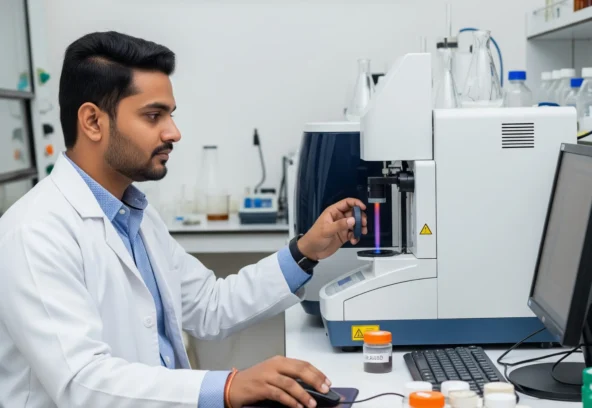
Soil and irrigation water are the foundation of farming. Without understanding their condition, farmers often waste money on unnecessary or harmful inputs. Testing reveals nutrient levels, pH balance, salinity, and more, allowing for targeted interventions.
2. Mobile Lab Services
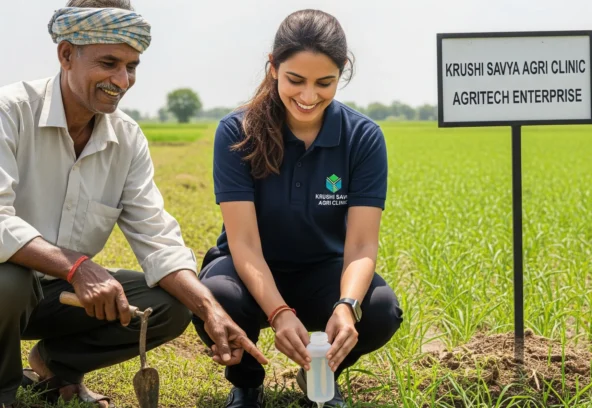
One of the biggest hurdles for farmers is accessibility. Mobile labs that reach villages provide on-site testing and instant results. This not only saves time but also builds trust by showing farmers practical outcomes.
3. Digital Tools
Smartphone apps, online booking systems, and digital platforms make it easier for farmers to access services, get advice, and plan crops. Over time, data collected can be used to predict soil and crop needs more accurately.
4. Drip Irrigation & Water Efficiency
Switching from flood irrigation to drip or sprinkler systems reduces water use by 30–40%. Combined with water testing, this ensures efficient irrigation and healthier crops.
5. Organic and Eco-Friendly Practices
Transitioning to organic farming or adopting eco-friendly practices such as vermicompost, crop rotation, and neem-based pesticides helps restore soil health while earning higher market prices.
Krushi Savaya’s Approach
At Krushi Savaya, the focus is on combining scientific testing, expert consultation, and farmer-friendly services. The goal is to empower farmers to make informed decisions and achieve better outcomes.
Services Offered:
Soil Sampling and Testing – Identifying nutrient levels and recommending the right fertilizers.
Water Quality Testing – Ensuring safe and productive irrigation.
Mobile Lab Testing – Bringing science directly to the farm.
Expert Consultation – Translating results into practical, crop-specific solutions.
Awareness and Training – Educating farmers on sustainable practices.
Real Benefits for Farmers
Farmers who adopt these methods report significant improvements:
Higher Yields – Scientific guidance boosts production by 15–25%.
Lower Costs – Targeted use of fertilizers and pesticides reduces expenses by up to 30%.
Improved Soil Health – Organic matter increases, ensuring long-term fertility.
Better Water Management – Efficient irrigation reduces wastage and protects groundwater.
Market Advantage – Eco-friendly and organic produce earns higher returns.
Inspiring Farmer Stories
Across India, success stories highlight the power of scientific and sustainable farming:
A cotton farmer in Gujarat increased yield by 20% after soil testing revealed nutrient imbalance.
A vegetable farmer in Rajasthan switched to organic inputs and now earns 25% more in the local market.
A sugarcane farmer in Maharashtra reduced water use by 35% with drip irrigation, cutting electricity costs and boosting yields.
These examples show how simple interventions can transform livelihoods.
The Road Ahead: Future of Sustainable Farming
The future of farming in India will be shaped by innovation, collaboration, and sustainability. Some key trends to watch include:
AI and Data Analytics – Predictive tools will help farmers anticipate crop needs and weather risks.
Climate-Resilient Crops – Breeding and adopting crops that can withstand drought or floods.
Farmer Cooperatives – Group farming models to share resources and access better markets.
Government & Private Partnerships – Joint efforts to expand testing services and promote eco-friendly methods.
Organic and Export-Oriented Farming – Growing demand for chemical-free produce will create new income opportunities.
Conclusion
The journey from traditional to modern farming is not about abandoning the past but about combining wisdom with science. With soil and water testing, expert consultations, and sustainable practices, farmers can secure better yields, reduce costs, and protect their land for future generations.
At Krushi Savaya, the mission is simple yet powerful: empower farmers with knowledge and technology to build a sustainable agricultural future.
The future of farming in India is bright, but only if we nurture it with care, innovation, and responsibility. Together, we can ensure that every farmer thrives and every harvest tells a story of progress.