
Agriculture has always been the backbone of India, providing livelihoods for more than half of the population. For generations, farming practices relied heavily on traditional knowledge, intuition, and inherited wisdom. While these methods had their value, modern agriculture faces new challenges—climate change, soil degradation, water scarcity, and increasing demand for food security. In this context, soil testing has emerged as one of the most powerful tools to support farmers in making informed decisions. At Krushi Savaya, we are committed to bridging the gap between advanced agricultural science and grassroots farming communities by offering reliable soil testing and consultation services.
Why Soil Testing Matters More Than Ever
Soil is the foundation of farming, and its health directly determines crop productivity and farmer income. Unfortunately, over the past decades, excessive use of chemical fertilizers and pesticides has degraded soil fertility in many regions of India. Farmers often face reduced yields even after increasing input costs. Without knowing the actual condition of their soil, they may apply fertilizers blindly, which leads to further imbalance.
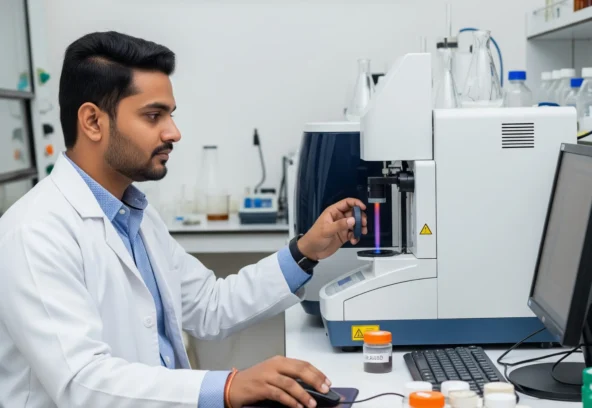
Soil testing helps farmers understand the precise nutrient status of their land. It provides details about essential elements such as nitrogen, phosphorus, and potassium, as well as secondary and micronutrients. More importantly, it also shows the soil’s pH level, organic matter content, and salinity. Armed with this knowledge, farmers can apply the right quantity of fertilizers, improve soil management practices, and ensure sustainable farming.
Challenges Faced by Indian Farmers
Indian farmers, particularly smallholders, face multiple barriers when it comes to adopting modern practices:
Lack of awareness: Many farmers are still unaware of the benefits of soil and water testing.
Accessibility issues: Rural areas often lack testing centers, making it difficult for farmers to get their soil analyzed.
Cost concerns: Farmers sometimes hesitate to spend money on testing, not realizing it saves them more in the long run.
Information gap: Even after testing, farmers may not understand technical reports without proper guidance.
These challenges highlight the importance of an integrated approach where testing is supported by consultation and practical advice.
How Krushi Savaya Supports Farmers
At Krushi Savaya, we believe that every farmer deserves access to scientific knowledge in a simple and practical way. Our services are designed to provide end-to-end solutions, from soil and water testing to personalized recommendations. Some of the key aspects of our work include:
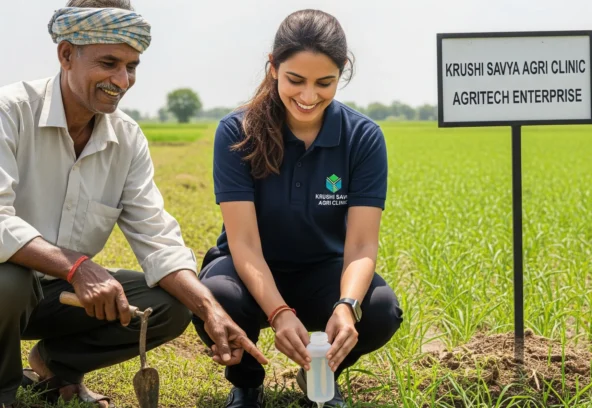
Soil Sampling and Testing: We collect samples from the farmer’s field and analyze them for nutrients, pH, and organic matter.
Irrigation Water Quality Testing: Water is as important as soil; hence we check for salinity, hardness, and contaminants.
Mobile Lab at Farms: For farmers who cannot travel, our mobile lab brings the testing facility directly to their doorstep.
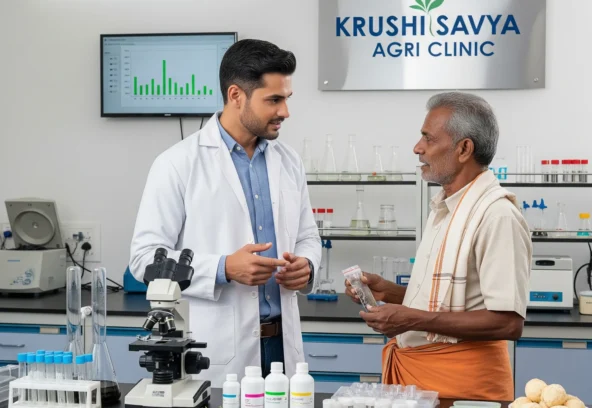
Consultation Services: We not only provide reports but also explain them in local languages, ensuring farmers know how to take action.
This holistic approach ensures that farmers don’t just receive numbers on paper but gain practical knowledge to improve their productivity.
Real Impact of Soil Testing
Consider the case of a cotton farmer in Gujarat who repeatedly faced declining yields despite spending heavily on fertilizers. After approaching Krushi Savaya, his soil was tested and found deficient in micronutrients, not the major fertilizers he was applying. With proper corrective action, his crop yield improved by 25% while reducing unnecessary expenses.
Similarly, a vegetable farmer in Rajasthan was struggling with wilting crops. A water test revealed high salinity levels, which was damaging the plants. Once he adopted corrective irrigation practices, his farm productivity increased significantly.
Stories like these are not isolated—they represent thousands of farmers who can benefit when science meets agriculture in the right way.
Long-Term Benefits for Farmers
The true power of soil testing lies in its long-term impact on farming communities:
Reduced input costs: Farmers save money by avoiding excessive or unnecessary fertilizer use.
Improved yields: Crops grow healthier when given the right balance of nutrients.
Environmental sustainability: Balanced fertilizer use prevents groundwater contamination and preserves soil health.
Better income: With higher yields and lower costs, farmers enjoy better profitability.
Resilience to climate change: Healthy soil is more resistant to drought and floods, ensuring stability in uncertain weather.
The Future of Smart Farming in India
As India moves towards modernization, the role of digital technology in agriculture will become more significant. Mobile apps, AI-driven recommendations, and data-driven farming practices will complement soil testing services. Farmers will be able to receive instant reports, monitor changes in soil health over time, and even predict nutrient needs for future crops.
Krushi Savaya envisions being at the forefront of this transformation by continuously integrating modern tools into our services. Our mission is to ensure that farmers do not feel left behind in the age of smart farming. Instead, we want them to be empowered participants in the agricultural revolution.
Conclusion
The journey of Indian agriculture is at a crossroads. To ensure food security, protect the environment, and uplift farmer livelihoods, soil testing must become a standard practice across the country. It is no longer just a scientific process—it is a farmer’s key to sustainable growth. Krushi Savaya is proud to contribute to this mission by making soil and water testing accessible, affordable, and farmer-friendly.
By combining traditional wisdom with modern science, we can build a future where Indian farmers not only survive but thrive. With the right knowledge at their fingertips, farmers can transform challenges into opportunities and secure prosperity for generations to come.