

Irrigation Water Quality Tests
1. pH: ₹29/-
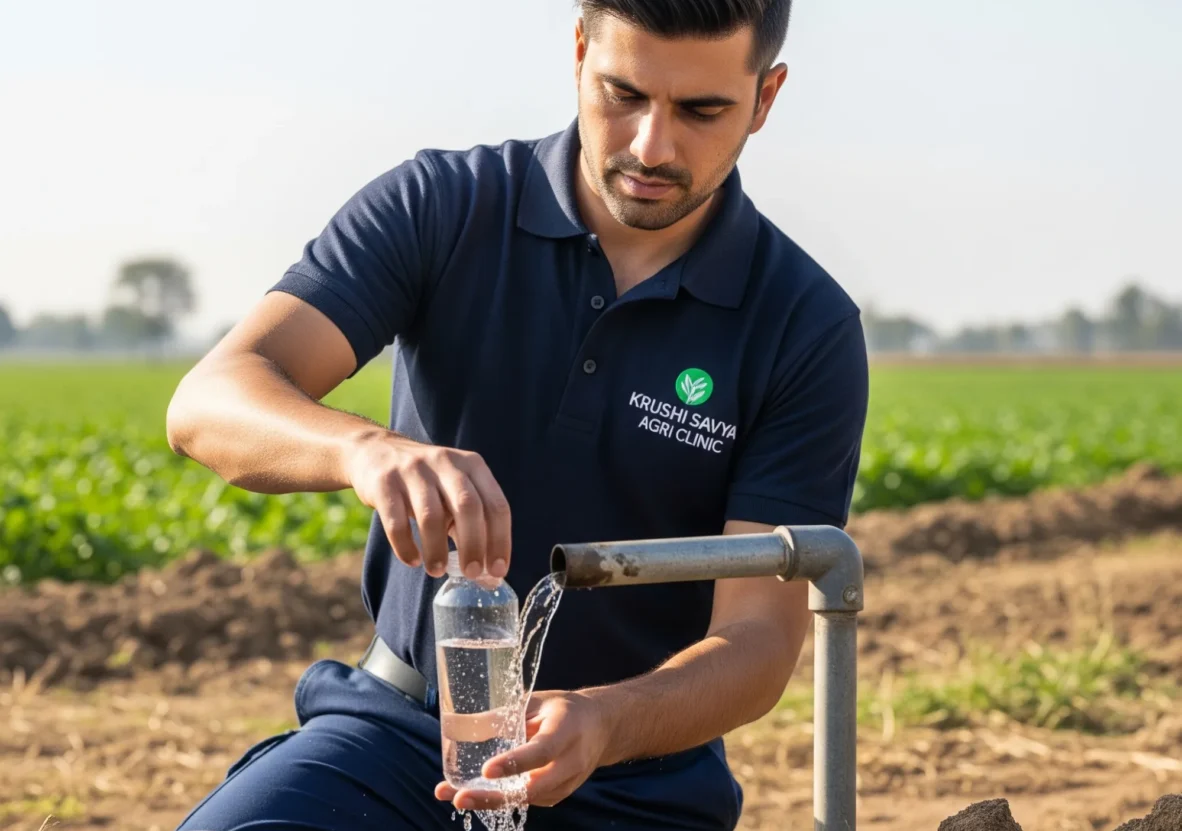
The pH of your irrigation water is a crucial factor that can significantly impact the long-term health of your soil. Just like soil, water has its own pH level, which can be acidic, neutral, or alkaline. Over time, the pH of your irrigation water will influence the pH of your soil, affecting nutrient availability and crop health.
Ideal Range (6.0 to 7.0): Water in this slightly acidic to neutral range is ideal as it is less likely to alter your soil’s pH and allows for optimal nutrient uptake.
Why Water pH is a Critical Factor for Your Farm:
Our comprehensive analysis includes a test of your irrigation water’s pH. By identifying potential issues, we can provide you with clear recommendations, such as using specific fertilizers or water treatment methods, to prevent long-term soil degradation and ensure your crops have the ideal environment to thrive.
2. EC (Electrical Conductivity): ₹29
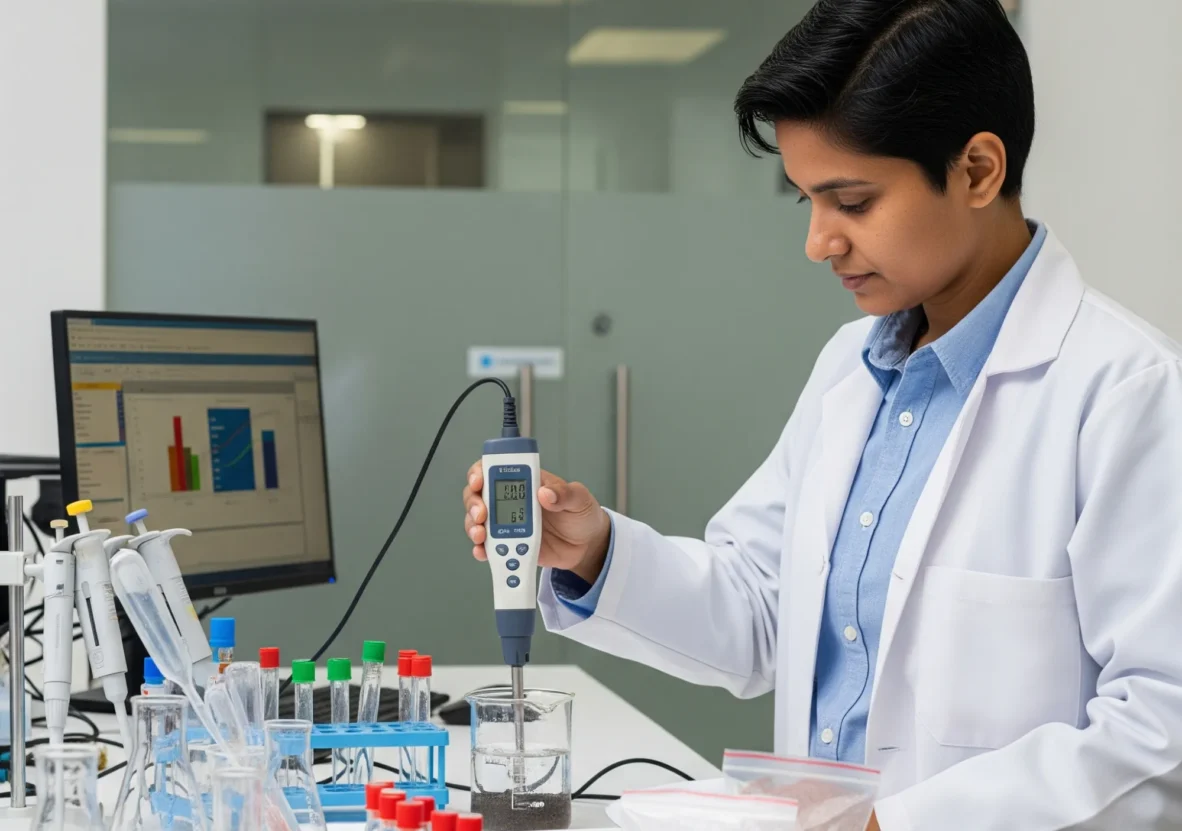
While we have discussed EC as a measure of soil salinity, it is just as critical to measure the EC of your irrigation water. This reading provides a precise measure of the total concentration of dissolved salts in your water, which can have a major impact on your crops and soil over the long term.
Why Water EC is a Critical Factor for Your Farm:
Our comprehensive analysis includes a test of your irrigation water’s EC. By identifying a high salt content, we can provide you with clear recommendations, such as using specific irrigation methods or soil amendments, to prevent long-term soil damage and protect your farm’s future.
3. Calcium + Magnesium: ₹99
Calcium + Magnesium in Irrigation Water
Just as Calcium (Ca) and Magnesium (Mg) are vital for your soil, their concentration in your irrigation water is a critical factor for long-term farm health. These two minerals are the primary components of water hardness, and while they are essential nutrients, high levels in your water can lead to significant problems.
Why Water Hardness Matters for a Farmer:
Our comprehensive analysis includes a test of your irrigation water’s Calcium and Magnesium content. By providing you with a precise reading of these minerals, we help you manage water hardness to protect both your crops and your valuable irrigation equipment.
4. Carbonates (CO₃) + Bicarbonates (HCO₃) : ₹99/-
Carbonates (CO₃) + Bicarbonates (HCO₃) in Irrigation Water
The presence of carbonates (CO₃) and bicarbonates (HCO₃) in your irrigation water is a key factor that can silently degrade your soil and reduce your crop’s yield. These compounds are a primary cause of water alkalinity, which has a direct and lasting impact on the health of your farm.
Why Carbonates and Bicarbonates in Water are a Problem:
Our scientific analysis provides a precise measurement of the carbonate and bicarbonate levels in your irrigation water. This allows us to provide a targeted strategy, such as water acidification, to neutralize their harmful effects, protecting your soil’s long-term fertility and ensuring your crops can absorb the nutrients they need.
5. TDS (Total Dissolved Solids): ₹99
Total Dissolved Solids (TDS) is a comprehensive measure of all the inorganic and organic substances dissolved in your irrigation water. It is a powerful indicator of water quality, revealing the overall level of salts, minerals, and other compounds that your crops will be exposed to.
The Relationship Between TDS and EC: TDS is directly related to Electrical Conductivity (EC). Since dissolved salts are the primary conductors of electricity in water, a higher EC reading indicates a higher TDS level. Our analysis provides both readings, giving you a complete picture of your water’s salinity.
Why High TDS is a Critical Concern for Your Farm:
Our comprehensive analysis provides a precise measurement of your irrigation water’s TDS. By understanding this critical parameter, we can help you choose the right crops, implement effective management strategies, and protect your soil and crops from the hidden threat of poor water quality.
6. Chloride: ₹99
Chloride (Cl) in Irrigation Water
While Chloride is an essential micronutrient for plants, an excess of it in your irrigation water can be a hidden cause of crop toxicity and yield loss. Chloride is a common component of dissolved salts, and high concentrations in your water can lead to a direct and damaging effect on your crops.
Why High Chloride in Water is a Problem:
Our comprehensive analysis includes a test of your irrigation water’s Chloride content. By providing you with a precise measurement, we can help you identify this potential problem early. Based on the results, we can provide recommendations on water management or crop selection to protect your farm from this invisible threat.
7. Residual Sodium Carbonate (RSC): ₹199/-
Residual Sodium Carbonate (RSC) is a highly specific and critical measure of your irrigation water’s quality, particularly in arid and semi-arid regions. RSC represents the excess of carbonates and bicarbonates over the amount of calcium and magnesium. This excess is a powerful indicator of your water’s potential to cause long-term damage to your soil.
Why RSC is a Red Flag for a Farmer:
Our advanced water analysis provides a precise RSC reading. A value greater than 2.5 meq/L is considered unsafe for irrigation. By identifying this problem early, we can provide you with a clear roadmap for treatment, helping you protect your soil and ensure your farm remains productive for years to come.
Our comprehensive analysis provides a precise measurement of your soil’s Water Holding Capacity. We use this data to give you a personalized management plan that includes recommendations on irrigation schedules and how to improve your soil’s ability to retain water for a more resilient and productive farm.
8. Complete Irrigation Water Quality Test: ₹653/-
Complete Irrigation Water Quality Test: The Invisible Threat
Water is the most valuable resource on your farm, but its quality is an invisible factor that can make or break your harvest. Our Complete Irrigation Water Quality Test provides a comprehensive analysis of the key parameters that can silently degrade your soil and reduce your crop’s yield. This is not just a test; it’s a proactive measure to protect your investment and secure your farm’s future.
This Essential Test Covers:
By understanding the quality of your water, you can choose the right management practices and prevent problems before they start, ensuring your soil remains fertile and your crops thrive.