
Water is life, and nowhere is this more true than in agriculture. In India, nearly 80% of freshwater resources are used for irrigation. Yet many farmers overlook one critical fact: the quality of irrigation water directly affects soil fertility, crop health, and ultimately farm profitability. While rainfall is a natural blessing, the dependence on wells, canals, borewells, and tube wells means that farmers are often using water without knowing its actual composition. At Krushi Savaya, we believe irrigation water testing is just as important as soil testing, and it is the foundation of sustainable agriculture for millions of farmers across the country.
Why Water Quality Cannot Be Ignored
Most farmers assume that as long as water looks clean, it is safe for crops. Unfortunately, this is far from the truth. Water can contain dissolved salts, high levels of bicarbonates, excess sodium, and even heavy metals. These contaminants may not harm humans immediately but can severely affect plants and soil.
For example, high salinity in water leads to poor crop growth, while excess sodium damages soil structure and reduces permeability. In regions like Rajasthan and Gujarat, saline water is a major reason for declining yields. Similarly, in some areas of Punjab and Haryana, high bicarbonate levels neutralize the effect of fertilizers, forcing farmers to spend more without seeing results. These hidden factors explain why two farmers in the same area, using the same crop and fertilizers, can have very different outcomes.
Challenges Faced by Farmers
Water testing is still not a common practice among Indian farmers. Some of the challenges include:
Lack of awareness: Many farmers are unaware that water can harm soil and crops over time.
Limited facilities: Access to professional testing labs is difficult in remote areas.
High costs of trial and error: Without testing, farmers waste money on fertilizers and pesticides that may not work.
Absence of guidance: Even if a test is done, farmers need help interpreting results and applying corrective measures.
These challenges make it clear that testing alone is not enough; farmers need complete solutions with advice they can trust.
Krushi Savaya’s Approach to Irrigation Water Testing
At Krushi Savaya, we go beyond testing—we provide farmers with actionable insights. Our process is designed to be farmer-friendly and affordable:
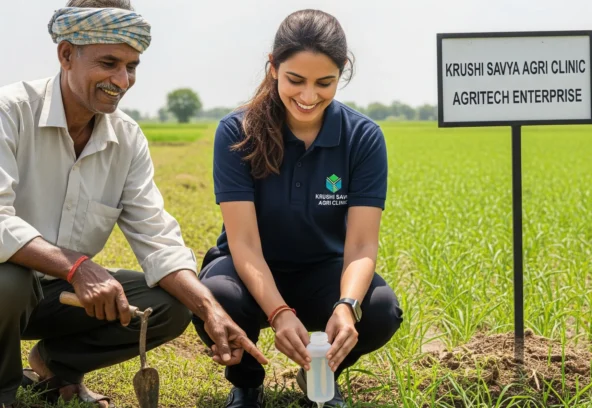
Sample Collection: Farmers can either bring water samples to us or request doorstep collection.
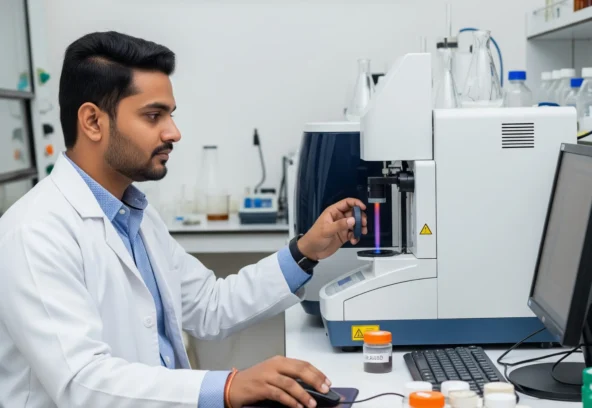
Scientific Analysis: The water is tested for salinity, sodium adsorption ratio (SAR), bicarbonates, calcium, magnesium, chloride, and other factors.
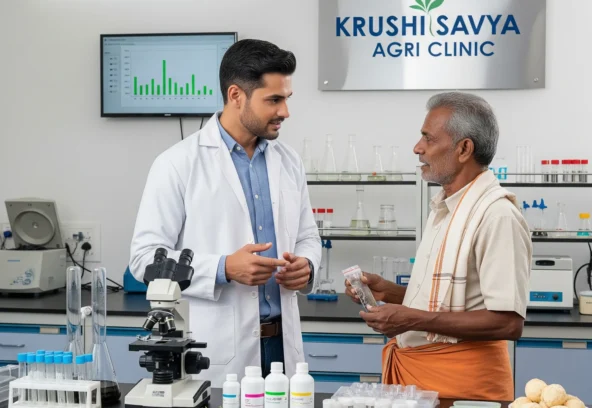
Simple Reports: Instead of complex chemical data, we provide clear results in local language with easy-to-follow recommendations.
Practical Solutions: Our experts suggest corrective practices such as gypsum application, crop selection, improved irrigation techniques, or blending water sources.
By connecting lab science with field-level advice, Krushi Savaya ensures farmers not only understand their water quality but also know how to act on it.
Real Stories from the Field
Take the case of a vegetable farmer in Rajasthan who was frustrated by stunted crop growth despite spending heavily on fertilizers. A simple water test showed high sodium content, which was degrading his soil structure. With Krushi Savaya’s advice, he started applying gypsum and switched to more salt-tolerant crops for that season. Within a year, his soil recovered, and yields increased significantly.
In another example, a paddy farmer in Andhra Pradesh was struggling with yellowing leaves and poor grain filling. Our water testing revealed high bicarbonate levels, which were locking nutrients in the soil. After corrective measures, including foliar sprays and balanced fertilizer application, his crop health improved, and his losses were reduced.
These cases show that water quality testing is not just a technical service but a practical lifeline for farmers.
Benefits of Irrigation Water Testing
The long-term advantages of regular water testing are immense:
Healthy soils: Prevents accumulation of salts and chemicals that damage soil fertility.
Improved yields: Crops grow better when they receive balanced water and nutrients.
Reduced costs: Farmers save money by applying only what is needed, instead of guessing.
Sustainable farming: Protects land and water resources for future generations.
Climate resilience: Helps farmers cope better with droughts and erratic rainfall.
When farmers see these benefits, they realize that testing is not an expense but an investment.
The Future of Water-Smart Agriculture
As agriculture modernizes, the role of data-driven water management will only increase. Technologies like sensors, mobile apps, and remote monitoring are already helping progressive farmers track water quality and usage in real time. But for millions of small and marginal farmers, services like Krushi Savaya are essential to bridge the gap between advanced science and grassroots reality.
By combining water testing with soil analysis and expert advice, farmers can adopt holistic practices that ensure long-term productivity. Imagine a future where every farmer knows not just how much water to use, but also its quality and impact on soil. That is the vision Krushi Savaya is working towards.
Conclusion
Water is more than just a resource; it is the lifeblood of farming. Without knowing the quality of irrigation water, farmers risk damaging their soil, wasting money, and reducing yields year after year. Through scientific testing, farmer-friendly advice, and affordable services, Krushi Savaya is helping Indian farmers protect their land and secure their livelihoods.
The future of agriculture in India depends on how wisely we manage our soil and water. By embracing irrigation water testing, farmers can turn hidden problems into visible solutions and move towards a sustainable and prosperous tomorrow.